
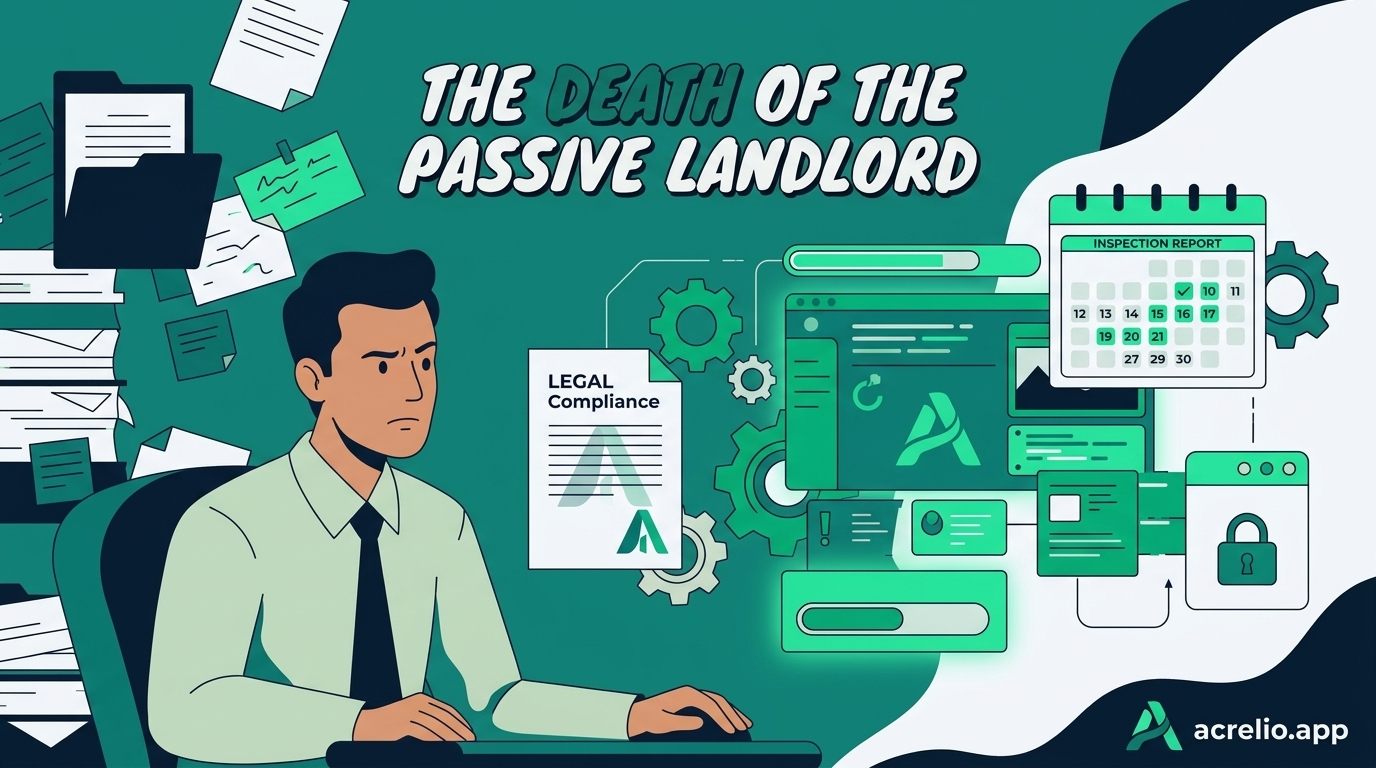
For decades, owning residential real estate was pitched as the ultimate "passive income" dream. You buy a property, sign a tenant to a template lease, and cash checks while the equity grows.
That dream is officially dead.
As we cross into 2026, the landscape for independent property owners has fundamentally shifted. Driven by sweeping national and localized tenant-protection overhauls—from the elimination of historic "no-fault" structures to rigid new mandates on habitability and security deposit handlings—the margin for error has hit absolute zero.
A casual approach to landlording is no longer just inefficient; it is a financial and legal liability.
Ignorance is No Longer a Legal Defense
The operational reality is simple: regulatory environments are demanding that individual real estate investors transition into highly disciplined business operators. Treating your portfolio like a hobby opens the door to severe compliance exposure.
- The Trap of the "Handshake" Lease: Relying on outdated, generic, or un-customized lease agreements downloaded from the internet leaves you completely unprotected against changing localized statutory grounds.
- The Security Deposit Clock: An alarming number of jurisdictions now enforce micro-deadlines (ranging from 14 to 60 days) for itemizing and returning security deposits. Messing up the timeline or failing to maintain a separate, interest-bearing account can trigger automatic treble damages in court.
- The Absolute Necessity of Move-In Inspections: Legally binding condition reports, backed by indisputable, timestamped photo evidence, are no longer optional "best practices." Without them, proving tenant damage at move-out has become next to impossible in modern housing tribunals.
Operating in the Zero-Spread Era
Beyond the legal framework, the macroeconomic floor has shifted. With insurance premiums experiencing volatile swings, vendor maintenance costs scaling upward, and baseline rent growth flattening out, landlords are facing intense net operating income (NOI) pressure.
When your financial spread compresses, you cannot afford a single month of unmitigated vacancy or a delayed rent payment. Independent landlords are realizing that spreadsheets and disparate notes cannot protect a modern real estate business. To survive the era of active operations, you need an integrated system that flags expiration dates, automates lease rules, tracks every penny of expenses, and logs maintenance timelines seamlessly.